
Without electricity, there is no internet. Poor power quality or interruptions in the electrical supply do not only affect the reliability of connectivity — they also put the electronic equipment required to operate the network at risk. This alone justifies including energy as part of the scope of action for community networks.
Beyond this basic necessity, there are two additional reasons why energy management must be considered:
Energy systems are now technological systems. Modern power infrastructure requires significant investment and incorporates advanced technology. Its value increases greatly when it is connected, monitored, and understood. Knowing how systems perform in real time allows better management, preventive maintenance, proper sizing, and continuous optimization — ultimately improving reliability and maximizing the return on investment.
Responsibility toward the planet. Access to energy also comes with responsibility. Using energy efficiently and reducing carbon footprint is part of building sustainable infrastructure. Community networks can promote responsible energy use, local renewable generation where possible, and informed decisions about consumption.
Integrating connectivity and energy thinking allows communities to build infrastructure that is not only functional, but resilient, efficient, and environmentally responsible.
To implement this features, it is done both with IoT devices and micro-computers installed on-site, and remote servers for monitoring and follow-up.
As examples of this type of implementations and experiences, in this case fom Timor-Leste, but reusable anywhere:
a) Smart Energy Monitoring and Control
The rE IoT Palanca Smart Energy Panel shows how community technology can address real challenges faced by networks and services in places with unstable electrical supply. Rather than accepting frequent outages or hidden inefficiencies, this IoT-based system makes energy visible, measurable, and manageable — giving communities the tools to understand and act on their own power realities.
By combining open IoT sensors, local control, and real-time visualization, the platform helps automate switching between energy sources (grid, generator, battery) and supports operational decisions where electricity is inconsistent. This empowers communities to:
gain insight into the actual performance of their energy systems
protect sensitive equipment from power quality issues
maximize uptime of critical infrastructure
build local capacity for monitoring and improvement
This is a practical example of how technology and community agency can work together to increase resilience and sustainability.
From a technical perspective, it includes:
IoT-enabled sensing and telemetry
Local control logic for power source management
Data logging and visualization dashboards
Alerts and status reporting for operators
This implementation demonstrates how low-cost hardware and open software can provide resilient energy management for critical infrastructure. It is just an example: It should be noted that in recent times there has been a very rapid evolution of components, improving capabilities, simplifying implementation and further reducing costs.
Back to topb) Solar Energy System with Battery Storage
This example documents a real-world solar energy installation with battery storage used to power local infrastructure and services. It illustrates how renewable generation, storage, and intelligent monitoring can be integrated to provide reliable electricity in environments where grid power may be limited, unstable, or expensive.
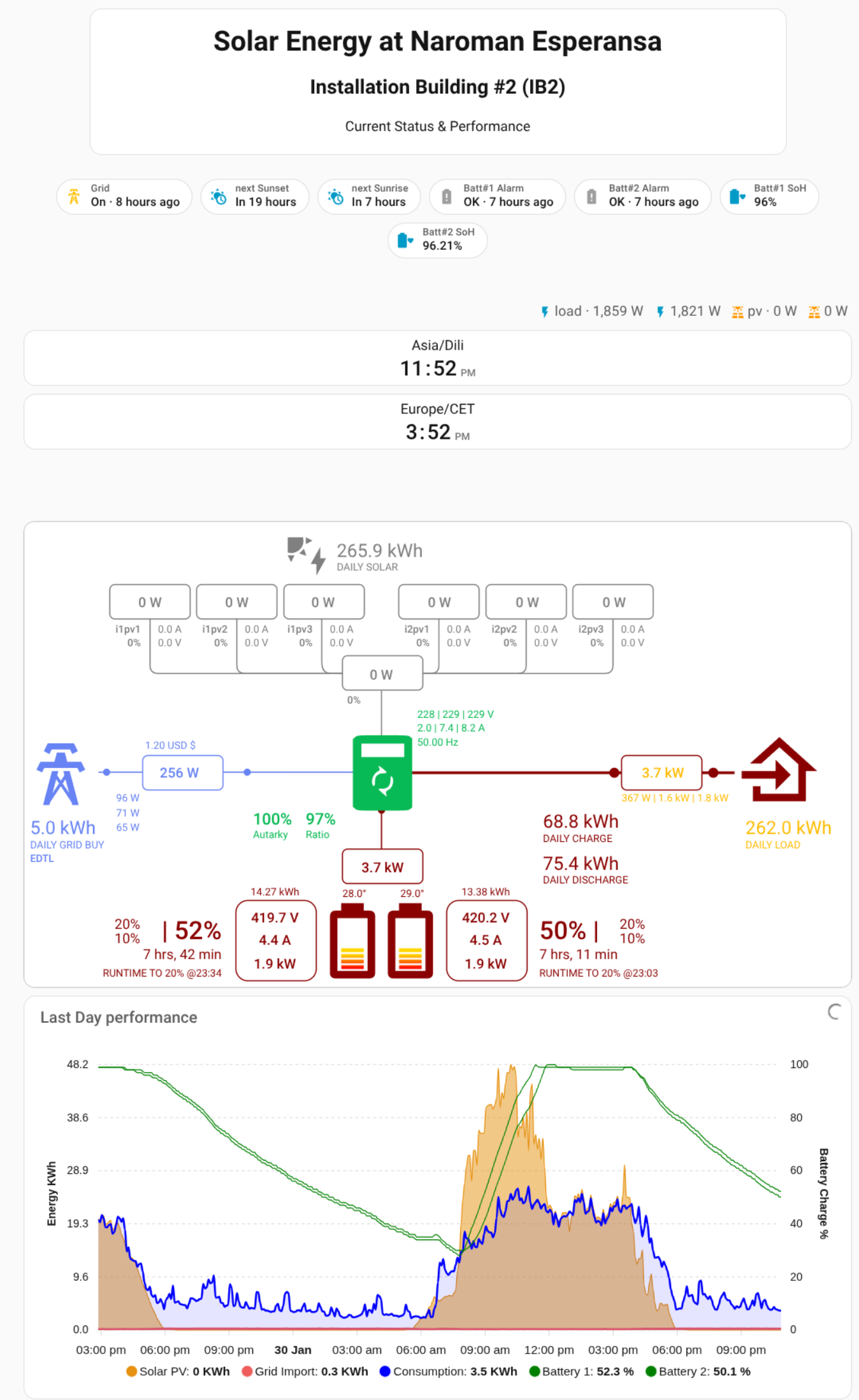
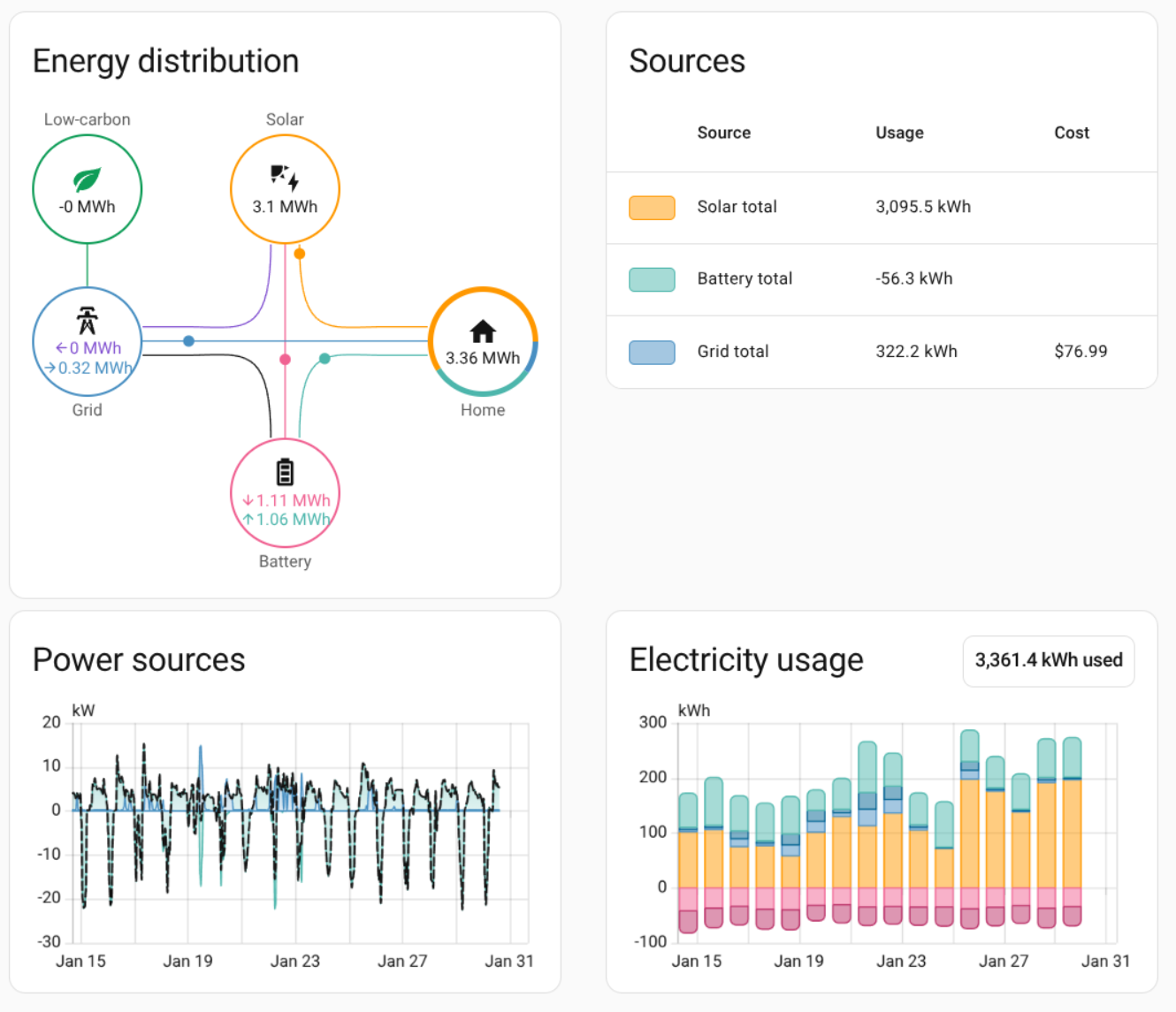
The system combines photovoltaic (PV) solar production, battery storage, and grid interconnection, all monitored through a digital energy management platform. This allows operators to visualize in real time:
electricity consumption patterns
solar production throughout the day
battery charge and discharge cycles
energy flows between solar panels, batteries, loads, and the grid
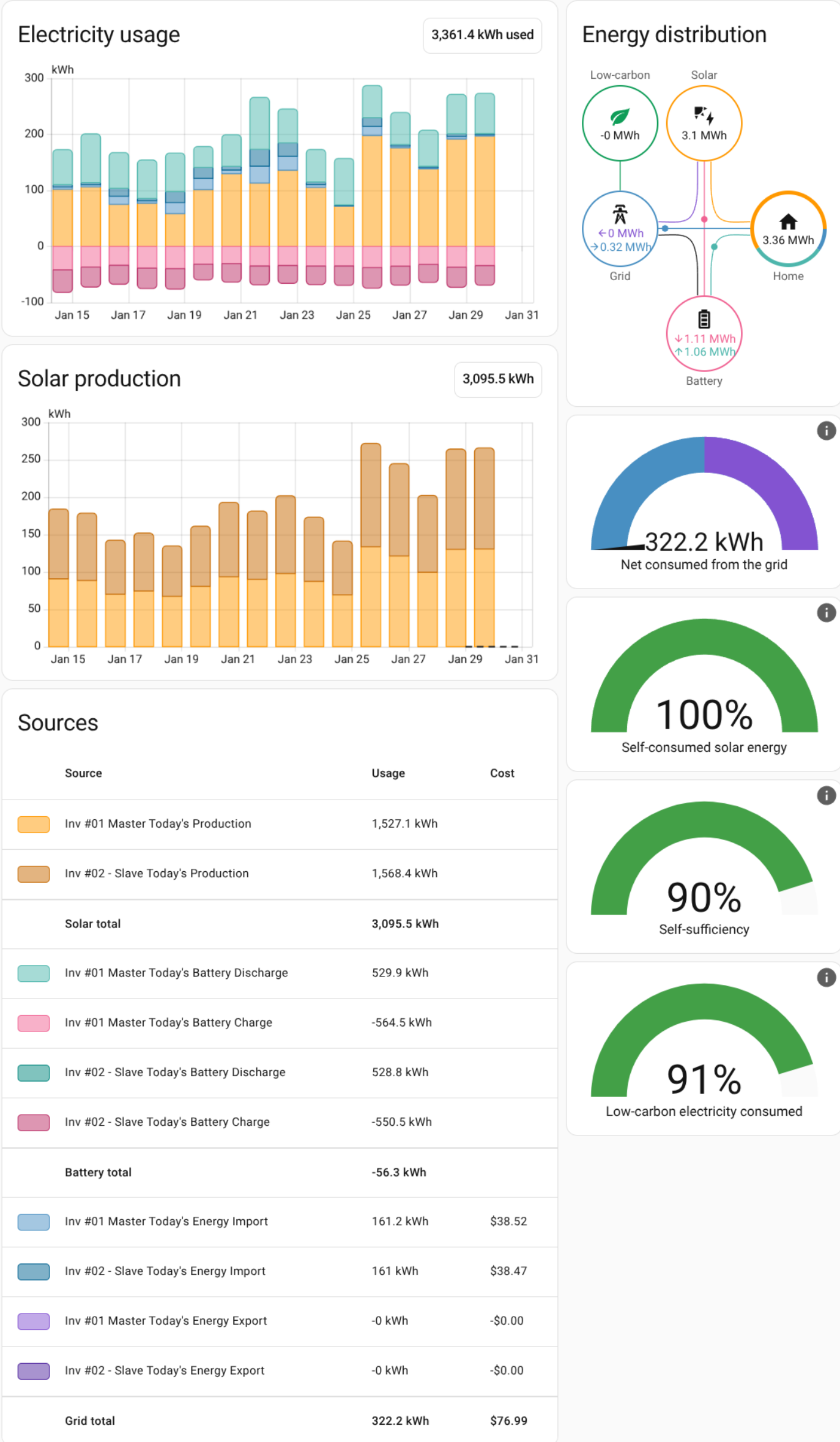
levels of self-consumption and energy self-sufficiency
Many solar equipment manufacturers already provide their own monitoring tools. However, managing systems through a common community platform brings important advantages. It reduces dependency on a single vendor, allows a consistent and coherent view across different brands and installations, and enables the reuse of dashboards, data models, and visualization tools. This approach supports interoperability, long-term sustainability, and shared operational knowledge.
The dashboards shown in this example are built using Home Assistant together with other open-source tools. This demonstrates how open platforms can integrate diverse devices and energy systems into a unified monitoring and management environment.
Beyond producing clean energy, the system highlights the importance of data visibility and operational insight. By continuously measuring performance, it becomes possible to:
optimize the use of locally generated solar energy
reduce dependence on external grid supply
protect equipment through controlled charge/discharge management
detect anomalies and maintenance needs early
dimension systems more accurately for future deployments
The visualizations include key indicators such as daily solar production, grid import, battery utilization, self-consumption rate, and low-carbon energy share. Together, these metrics transform an energy installation from a passive system into an actively managed and continuously improving infrastructure component.
This approach reflects the broader philosophy of community infrastructure: combining renewable energy, open digital monitoring, and local operational capacity to build systems that are resilient, efficient, interoperable, and environmentally responsible.
Back to top